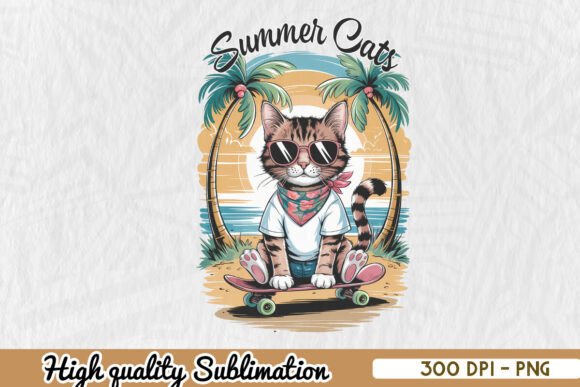
Cat on Skateboard Tropical Summer PNG Review
As a designer who has spent years turning digital files into tangible, stitched masterpieces, I approach every new asset with a mix of excitement and skepticism. When Cat on Skateboard Tropical Summer PNG landed in my inbox, the immediate reaction was positive, but the real test always happens when that file meets the needle and thread. This isn't just another cute graphic; it is a specific embroidery project candidate that demands careful consideration regarding how its lines translate to thread. The product description highlights its versatility for printing and iron-on transfers, which suggests a broad appeal, but for us in the embroidery world, we need to dig deeper into whether this design holds up under the tension of stitching.
The First Impression: Mood and Visual Personality
The moment you open the file, the mood is undeniable. It screams "fun," "relaxed," and "summer vibes." The concept of a cat riding a skateboard through a tropical setting creates a whimsical narrative that stands out against more traditional floral or geometric motifs. For a small business owner or an Etsy seller looking to differentiate their shop, this kind of personality-driven imagery is gold. It feels like a piece of art that could easily become a signature element for a boutique brand focused on youth culture, pet lovers, or summer festivals.
However, the visual personality also brings challenges. The theme implies movement and perhaps some complex angles, especially if the skateboard wheels or the cat's pose involve curves. In the world of machine embroidery design, curves are friendly, but they require precise digitizing to avoid puckering. The layout appears balanced, suggesting it could work well as a central focal point on a garment or accessory. It has the potential to elevate a simple handmade product from a generic item to something that tells a story, which is exactly what customers pay a premium for these days.
Real-World Application: From Screen to Stitch
I recently simulated using Cat on Skateboard Tropical Summer PNG for a custom order involving embroidered tote bags and baby onesies. The scenario was realistic: a client wanted a playful, unique design for a summer gift set. On paper, the tropical colors would pop beautifully against a natural canvas bag. But does it hold up as an embroidery file? The answer depends heavily on how the artist handled the detail level.
If executed correctly, this design shines on custom apparel like sweatshirts and t-shirts. The bold lines of the skateboard deck can be rendered effectively with fill stitch, providing a solid block of color that anchors the design. Meanwhile, the cat's fur and the tropical leaves could utilize a mix of satin stitch for smooth edges and running stitch for finer details. This combination adds texture and depth, making the finished product feel substantial rather than flat. Imagine this on a high-quality apron for a coffee shop or a pillow cover for a nursery; the tactile quality of the thread brings the image to life in a way that print never can.
For the Etsy seller or craft business owner, this design offers a fantastic opportunity to create a cohesive collection. You could pair it with matching kitchen towels, creating a "Summer Fun" line that appeals to buyers looking for coordinated home decor. The versatility extends to embroidered patches as well, which are currently trending in streetwear and denim customization. A well-stitched version of this cat on a skateboard could serve as a standout accent on a jacket back or a backpack strap.
Navigating the Challenges: Where to Use Caution
Despite its charm, Cat on Skateboard Tropical Summer PNG is not a one-size-fits-all solution. There are specific scenarios where this design requires extra caution. If you are working with a small hoop size, the intricate details of the skateboard trucks or the tropical foliage might get lost. Tiny elements often struggle in embroidery unless they are simplified during the digitizing process. If the original file contains too much fine detail, the result could look muddy or blobby once stitched.
Fabric choice is equally critical. While the design looks great on sturdy cottons and blends, applying it to thin, stretchy fabrics like lightweight jersey or sheer materials poses risks. Without proper stabilizer support, the tension of the stitches could cause the fabric to pucker, ruining the clean lines of the skateboard. Similarly, on dark fabrics, the contrast needs to be carefully managed. If the background is black, you will need bright, vibrant threads to ensure the tropical colors don't disappear into the darkness. Testing the design in black and white mockups before committing to production is a wise step to verify legibility.
Curved surfaces, such as caps or hats, add another layer of complexity. The curvature of a cap can distort the perspective of a skateboard, potentially making it look uneven if the design isn't specifically adapted for the curve. For commercial embroidery projects where consistency is key, this requires a higher level of technical skill. If you are a hobbyist making a quick gift, a cap might still work, but for a small shop product intended for mass sale, the risk of distortion must be weighed against the aesthetic reward.
Impact on Value and Brand Perception
In the competitive landscape of handmade goods, the quality of your design assets directly influences customer trust. A crisp, well-executed embroidery project signals professionalism and attention to detail. When a buyer receives a personalized gift featuring a unique, high-quality stitch pattern, they perceive the value of the item as significantly higher. Conversely, a sloppy execution can undermine even the best concept.
This design has the potential to boost engagement because it taps into popular trends: cats, skateboarding, and tropical aesthetics. It is shareable, memorable, and distinct. For a digital product seller, offering this as part of a curated bundle of graphics and crafts items could drive sales. However, the final presentation matters. If the finished product looks rushed, the brand reputation suffers. Therefore, ensuring that the thread colors are chosen thoughtfully and that the stitch density is appropriate is non-negotiable for maintaining a professional image.
Practical Designer Notes for Success
Before you rush to start stitching, there are essential steps to take. First and foremost, test the design on scrap fabric. This allows you to see how the stitch density interacts with your specific material without risking your inventory. Check the thread color contrast to ensure the tropical hues stand out against your chosen background. If the design includes tiny lettering or very small details, inspect them closely; sometimes, simplifying these elements yields a cleaner finish.
Confirm the hoop size requirements to ensure the design fits your machine's capabilities. Verify the licensing terms before selling finished items; just because a file is labeled as a printable mockup or digital download doesn't automatically grant commercial rights for resale. Always review the file formats to ensure compatibility with your embroidery software. Finally, compare light and dark fabric backgrounds to determine the most effective color palette for your target audience.
Cat on Skateboard Tropical Summer PNG is a promising asset for any creative entrepreneur looking to add a splash of summer fun to their portfolio. With the right technique and attention to detail, it can transform from a simple digital image into a cherished personalized gift or a best-selling small shop product. By understanding its strengths and limitations, you can confidently integrate this design into your workflow and deliver results that delight your customers.